Where Ideas Become Real.
Every Robofleet project starts with a question. Can I build it? Can I make it move? Can I make it respond? Can I make it smarter?
Explore the journey from a first idea to a working creation. Explore. Build. Code. Test. Improve.
When students can see their ideas come alive.
STEM becomes more exciting when students can connect an idea to something they can build, test and improve.
A sensor becomes an input. A motor becomes movement. Code becomes behaviour. A controller becomes the brain. A collection of components becomes a working project.
This is where learning becomes an experience.
A sensor becomes an input.
Students explore how systems can observe changes around them.
A motor becomes movement.
Electrical signals can become physical action through motors.
Code becomes behaviour.
Programming gives a system rules for deciding what to do.
Components become a project.
Students connect individual technologies into a working creation.
Every project begins with a question.
Students explore what a machine can sense, how it can make decisions and how programming can turn those decisions into action.
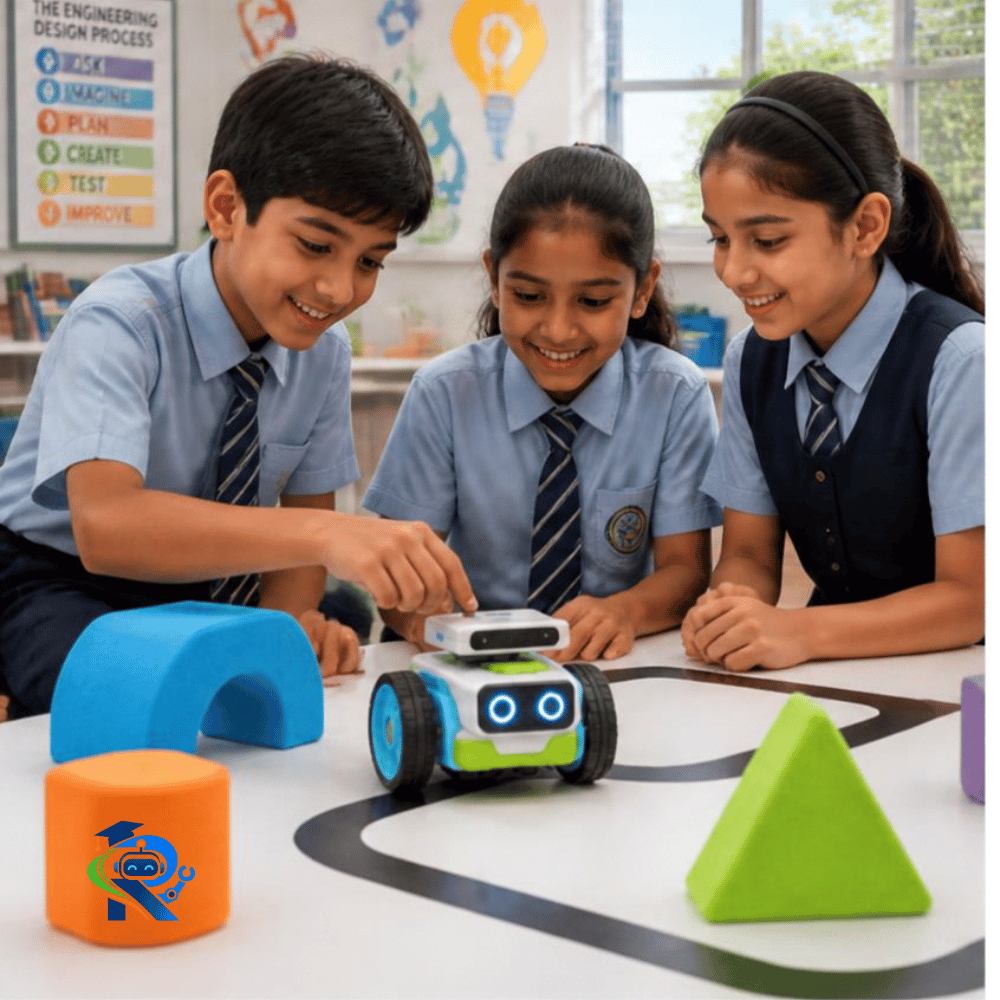
The Robot That Follows the Path
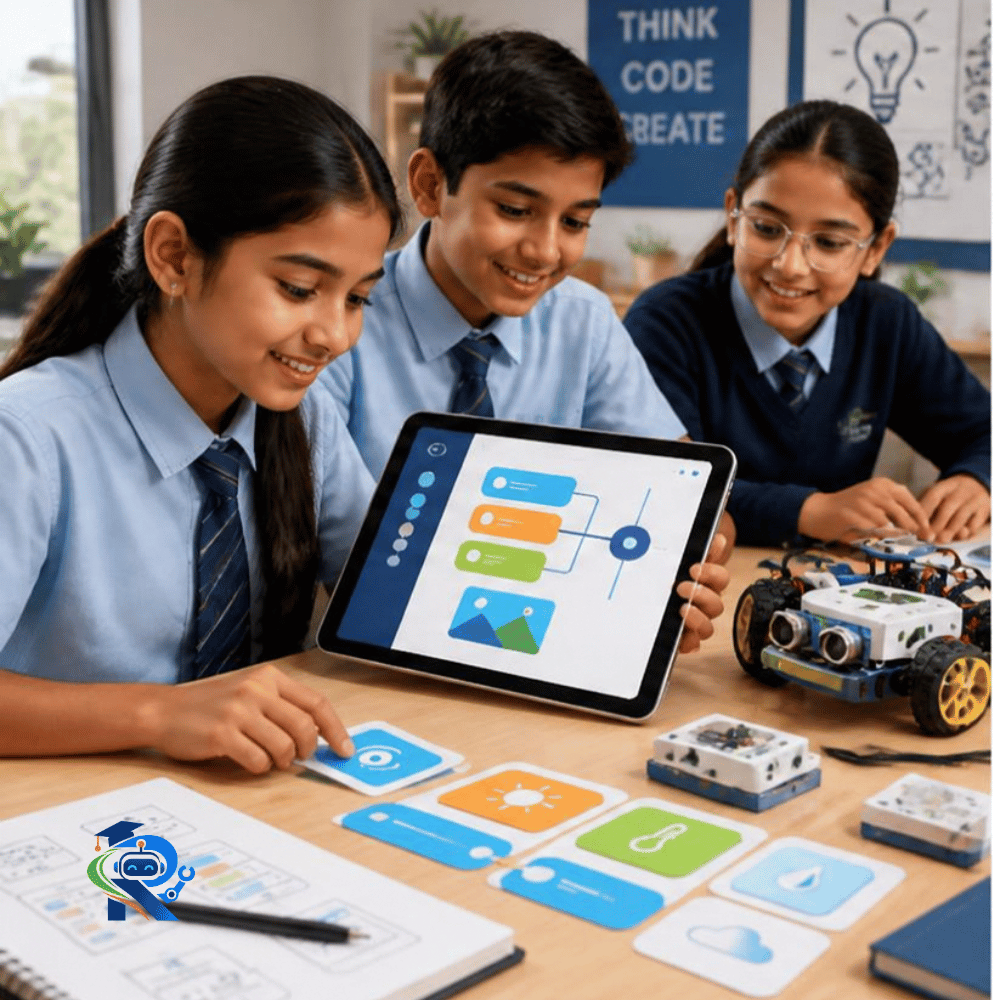
How can a robot know where to go? Students explore sensors, controllers, motors and programming to create a robot capable of following a defined path.
The Robot That Avoids Obstacles
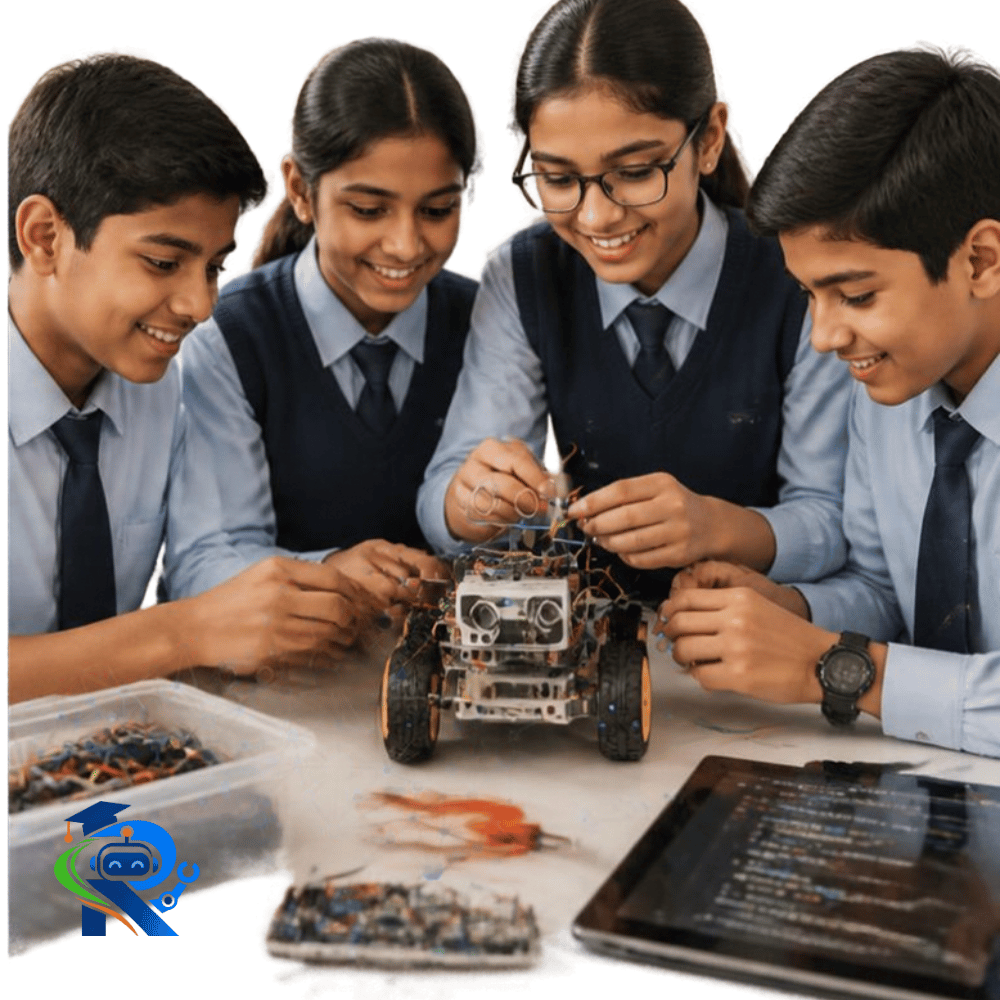
A robot encounters an obstacle. Instead of simply stopping, it needs to detect the situation and respond. Students explore how sensor information can change programmed behaviour.
The Robot That Seeks Light
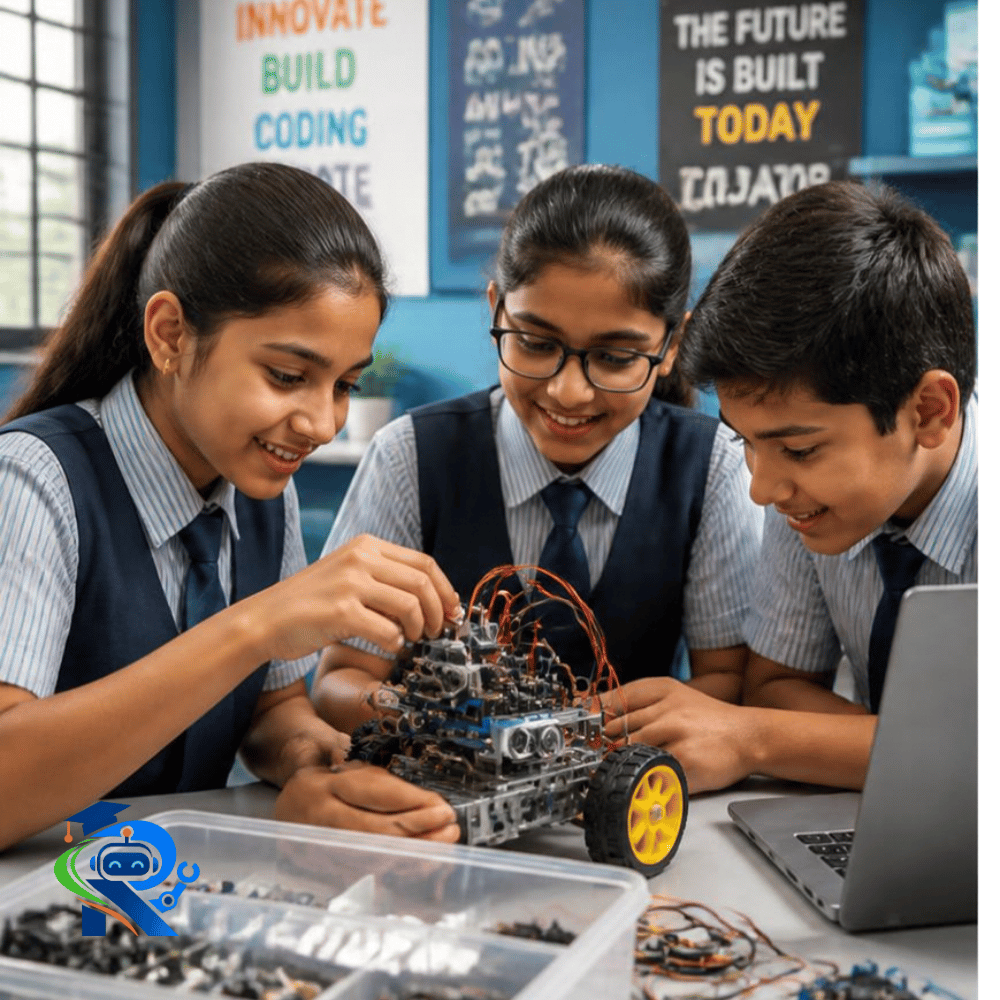
Can a robot detect where light is coming from? Students experiment with light sensing and robotic movement to understand how environmental information can influence machine behaviour.
The Robot That Knows the Edge
A moving robot needs to understand its surroundings. Students explore sensing and programmed decision-making to create a robotic system designed to avoid a drop or edge.
Not every story needs a robot.
Robofleet projects also explore how technology can respond to everyday situations through sensing, logic, electronics and automation.
When the Street Light Knows It's Dark
Instead of switching a light on manually, students explore how a system can respond to changing light conditions.
When the Soil Gets Dry
Students use moisture sensing to explore how an electronic system can identify changing conditions and respond.
Learning Focus: Sensors • Electronics • Automation
When Someone Enters
Students explore sensors, logic and alerts to understand the foundations of a simple security automation system.
Learning Focus: Sensors • Security • Logic
Turn information into action.
Simple project questions can become introductions to monitoring, sensing, automation and connected systems.
When Water Levels Change
Students explore how technology can detect water-level conditions and create an appropriate response.
Smart Homes
Explore automation, smart switches and app-controlled systems.
Smart Mobility
Experiment with robots, navigation and movement.
Smart Classrooms
Explore IoT applications for connected learning environments.
Smart Farming
Understand how connected technology can be applied to agricultural monitoring and automation.
Pollution Monitoring
Explore how sensors and connected systems can help monitor environmental conditions.
Healthcare Applications
Discover how IoT concepts can be applied to healthcare-related technology systems.
One project can lead to another question.
The purpose isn't to finish one project. It's to develop the confidence to imagine the next one.
Projects evolve as students progress.
The grade-wise technology journey introduces increasing levels of complexity as students move through the learning pathway.
Start With Foundations
Electronics, sensors, simple security systems, smart electronics and introductory robotics.
Build & Program
Coding, sensor-based robots, app development, home automation and app-controlled systems.
Connect Systems
IoT, smart environments, AI applications and design thinking.
Explore Advanced Systems
AI, Python, neural network concepts, advanced robotics, cybersecurity and system integration.
Start with “What happens if…?”
Then comes the experiment.
Try. Something doesn't work. Test. Change the code. Try again. The robot moves. Improve it.
A working project emerges. Now ask a bigger question.
That is the story of hands-on learning.
What will you build?
Robofleet gives students the tools and structured learning pathway to move from curiosity to creation. They can build, code, experiment, make mistakes, solve problems and create something that wasn't there before.
