From Curiosity
to Creation
Schools get a complete ecosystem that brings together STEM kits, grade-wise curriculum, teacher training and digital learning support.
One Ecosystem. One Connected Learning Journey.
Robofleet brings the essential elements of hands-on STEM education together. Students work with physical components, structured curriculum, digital resources and practical projects while teachers receive the support needed to guide the experience.
Everything Students Need to Build.
STEM Kit
Students work directly with physical components to turn concepts into working projects.
- Sensors
- Motors
- Controllers
- Switches & displays
- Construction components
Grade-Wise Curriculum
Learning progresses systematically from Grade 3 to Grade 10.
- Electronics
- Robotics
- Coding
- IoT & AI
- Python & advanced systems
Hands-On Projects
Students apply concepts through practical projects rather than concepts alone.
- Electronic circuits
- Smart automation
- Autonomous robots
- IoT applications
- AI & Python projects
Teacher Training
Teachers receive training and ready-to-use learning resources to facilitate hands-on STEM sessions.
- Concept guidance
- Project facilitation
- Learning resources
Digital Support
Video and digital curriculum resources reinforce what students build and explore in the lab.
- Digital curriculum
- Video resources
- Concept reinforcement
Concepts Become Experiences.
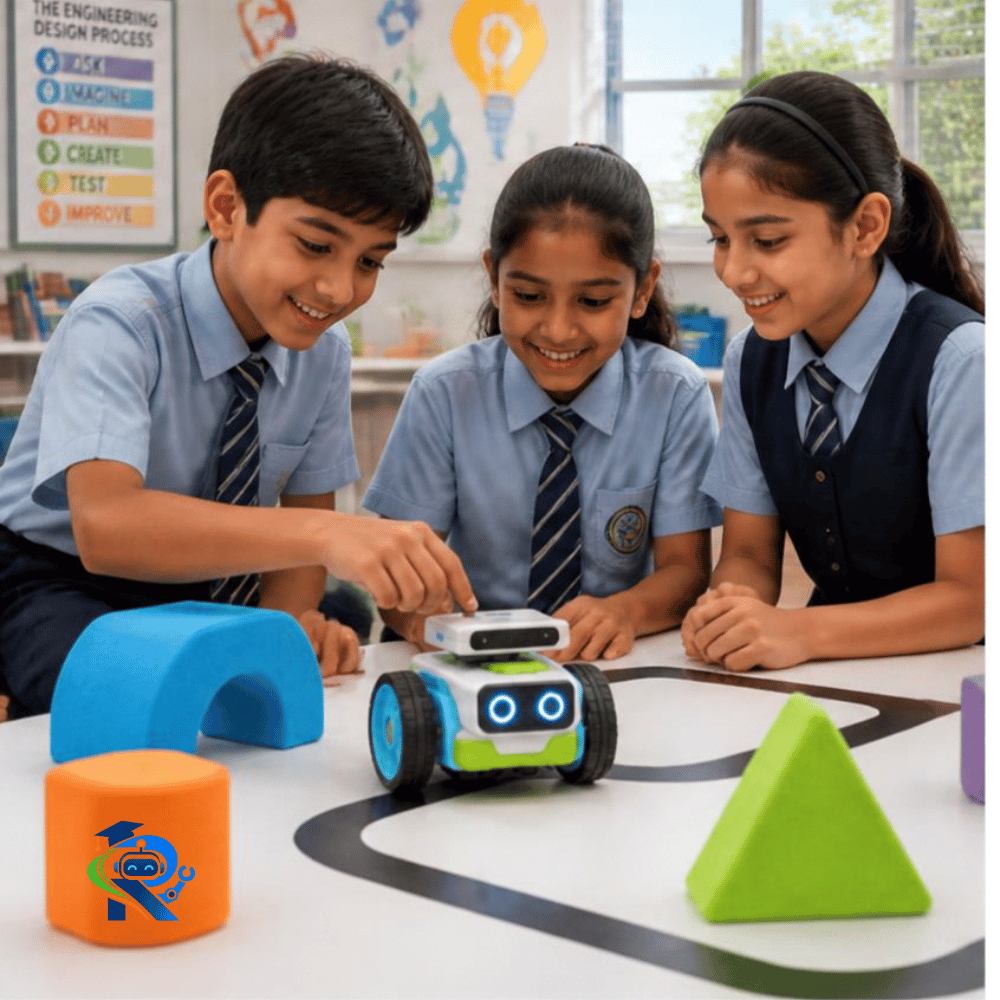
Learn. Build. Improve.
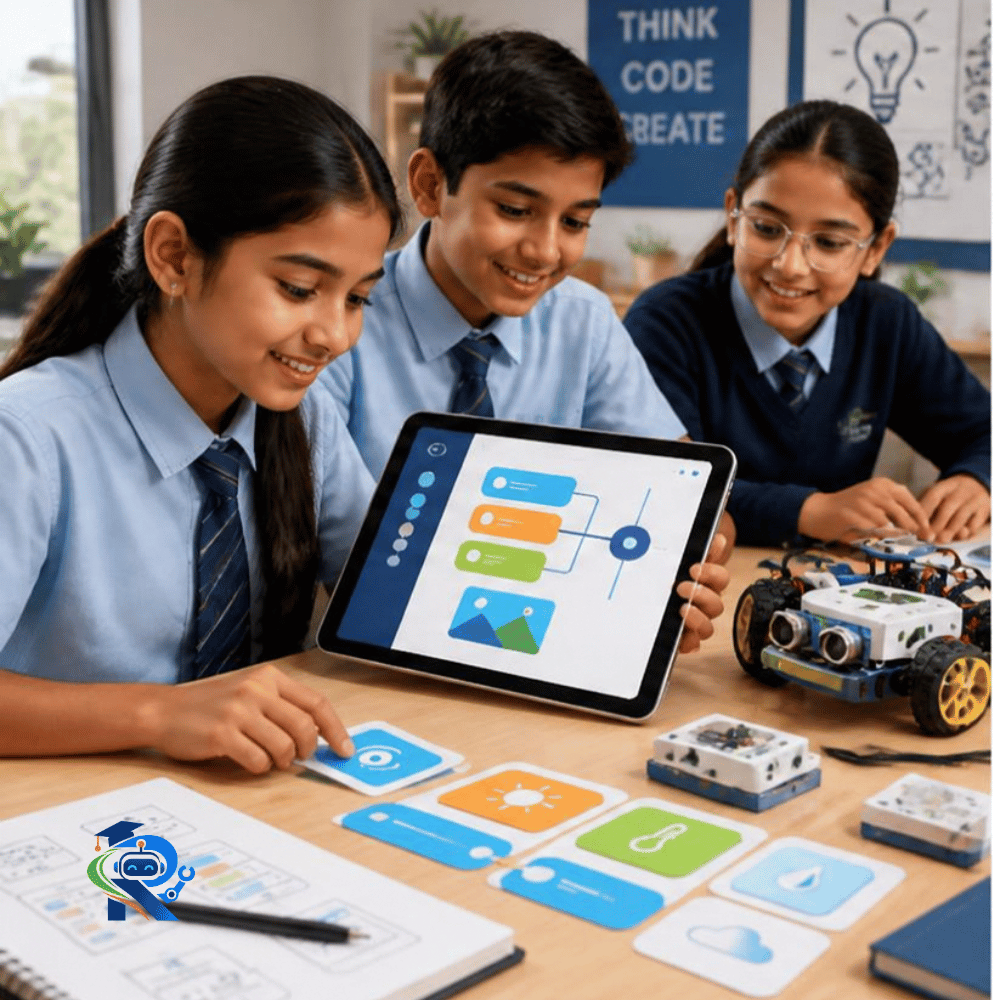
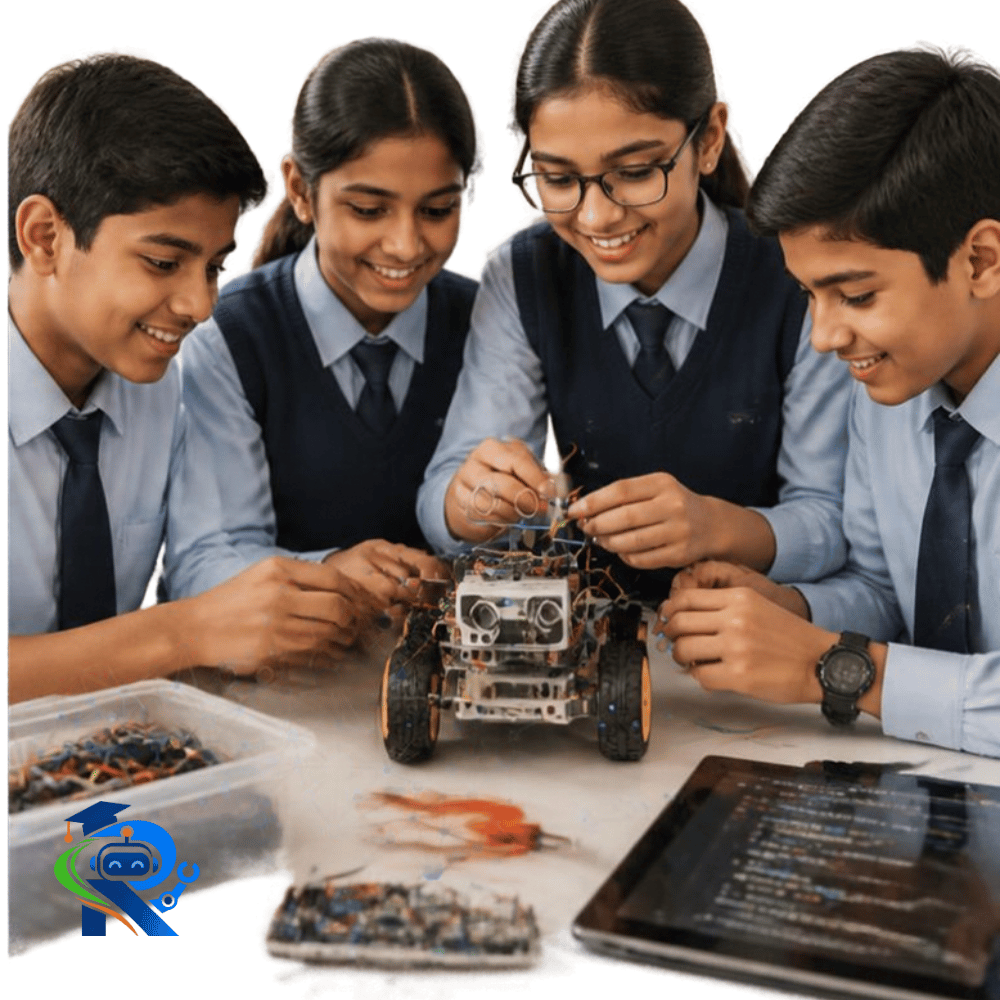
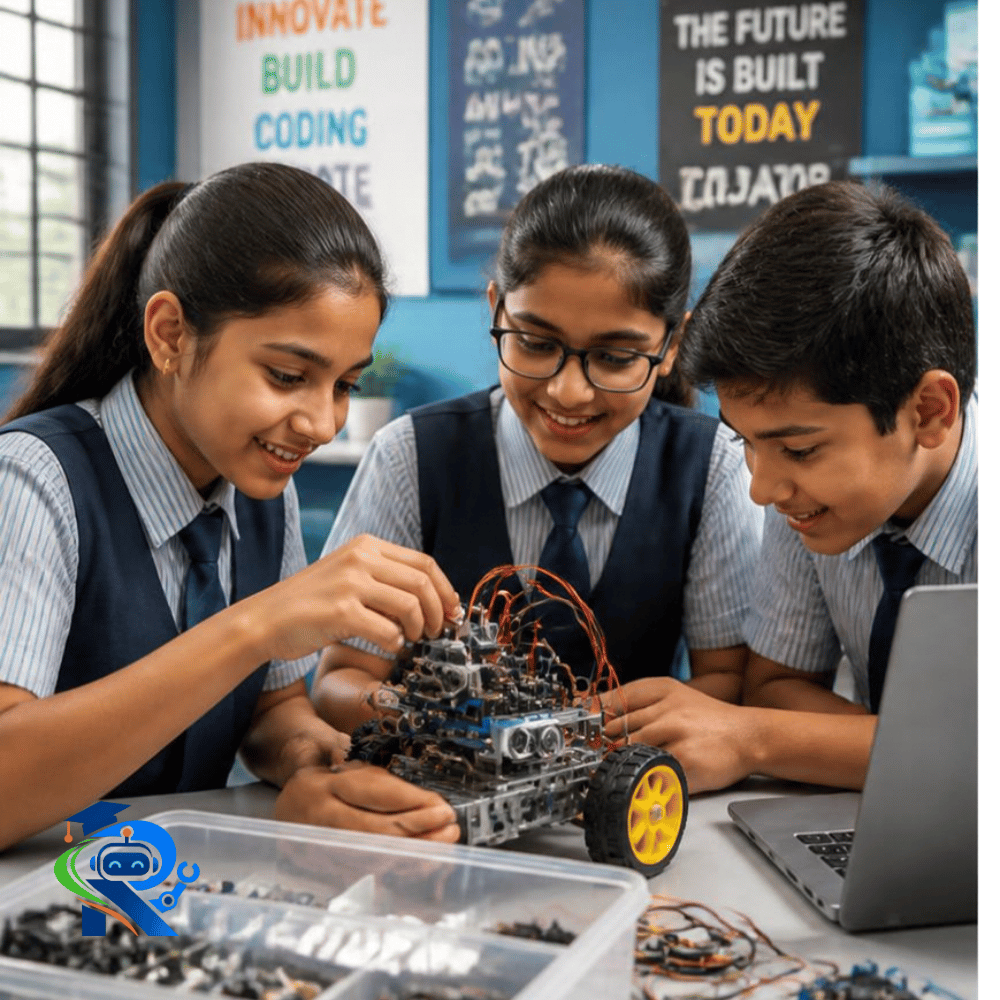
Every project follows a simple learning loop. Students understand an idea, explore the technology, build a first version and then learn through testing and improvement.
The process encourages students to see mistakes as useful information and experimentation as part of creating.
Learn
Understand the concept and its real-world relevance.
Explore
Discover components, technology and possible applications.
Build
Turn the concept into a physical project.
Code
Program the system to perform a specific task.
Test
Observe the result and identify what works.
Improve
Modify the design, logic or code and try again.
Solve
Apply the learning to a practical problem.
Innovate
Ask what else can be created from the same idea.
A Journey That Grows With the Student.
Basics of Electronics
Students begin with electronic circuits, sensors and simple science and mathematics applications.
Robotics & Smart Electronics
Students apply sensors and electronics to robotics, sustainability and autonomous projects.
Robotics With Coding
Students use programming and logic to control robots and technology projects.
App Development
Students explore MIT App Inventor and connect applications with automation and robotic systems.
Internet of Things
Students explore connected technology across smart homes, classrooms, vehicles, industries and more.
AI & Design Thinking
Students are introduced to artificial intelligence, practical AI projects, Python and design thinking.
Artificial Intelligence
Students explore AI applications, project cycles, Python and intelligent technology systems.
Robotics & AI
Students progress toward robotics systems, AI, cybersecurity, Python and system integration.
The Technology Builds With the Student.
What Happens Inside a Session?
Introduce
Introduce the concept and connect it to its real-world relevance.
Construct
Use the STEM kit to construct the project and explore its components.
Code
Apply coding and logic to control the physical system.
Test
Try different inputs, outputs and behaviours to understand what happens.
Improve
Identify improvements and explore what could be built next.
Student. Teacher. School.
The Student
Students are active participants in the learning process.
- Ask questions
- Build projects
- Write code
- Experiment
- Find solutions
- Improve designs
- Create new ideas
The Teacher
Teachers become facilitators of exploration with structured curriculum, training and learning resources.
- Introduce concepts
- Guide hands-on activities
- Explain components
- Encourage experimentation
- Support problem solving
- Facilitate project work
The School
Schools receive a structured framework for implementing STEM education.
- Grade-wise curriculum
- STEM infrastructure
- Teacher support
- Digital resources
- Project experiences
- Progressive learning
Five Layers. One Experience.
Concept to Creation.
The Robofleet approach can be understood as a progression: understand an idea, explore the technology, build something, give it behaviour, experiment, improve and imagine what comes next.
Students don't simply learn about the technologies shaping tomorrow. They start building with them today.
That's How STEM Becomes an Experience.
Discover how Robofleet can bring this connected learning journey to your school.
