Explore the Technologies Shaping Tomorrow.
Technology becomes meaningful when students can see it, touch it, build with it and make it work. Explore a connected learning journey across Electronics, Robotics, Coding, Apps, IoT, AI and Python.
One Ecosystem. Many Technologies.
Students don't learn each technology in isolation. They gradually discover how components, code, sensors, connectivity, robotics and intelligent systems can work together to create solutions.
Start With the Building Blocks.
Electronics provides the foundation for understanding how technology works. Students explore circuits, inputs, outputs, switches and components before applying these ideas to practical projects.
- Electronic circuits
- Lights and buzzers
- Switches and push buttons
- Displays
- Dimmers
- Sensors
- Logic concepts
- Science and mathematics applications
Concept → Component → Input → Output → Working Project
Turn Code Into Movement.
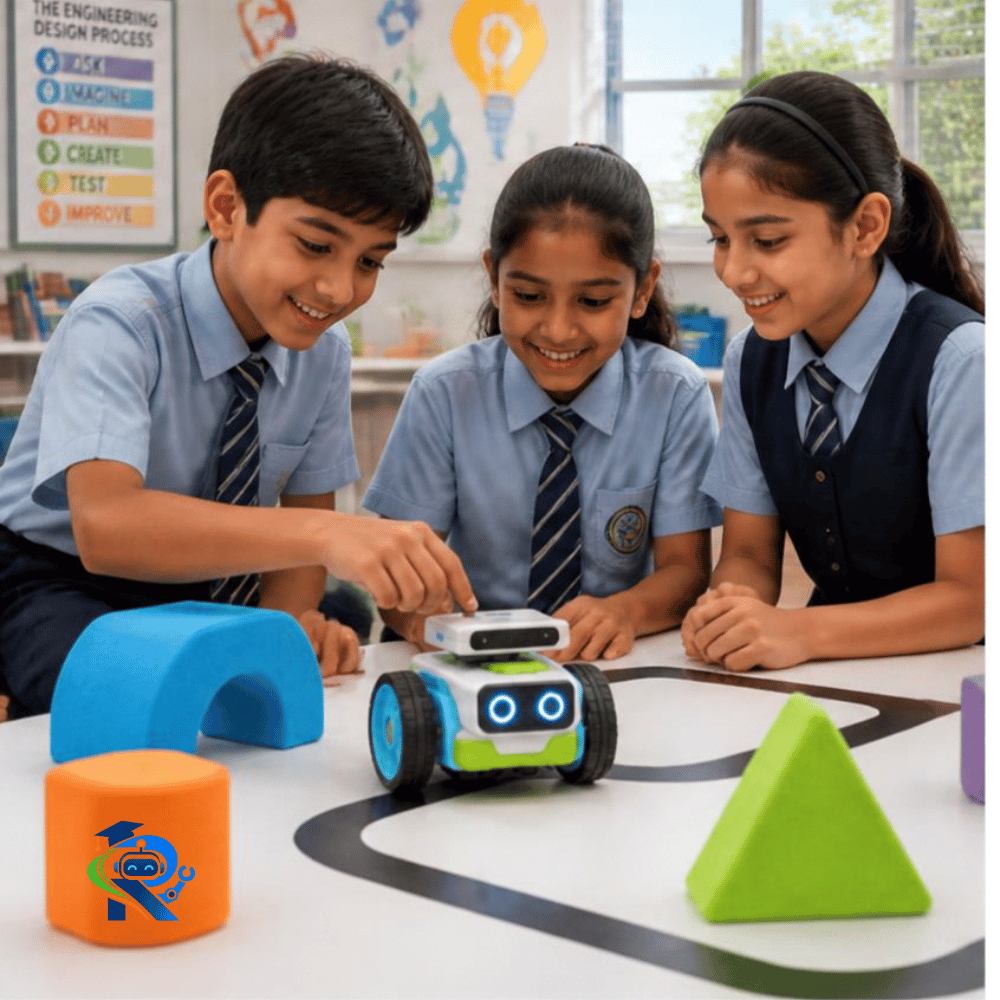
Robotics brings together electronics, sensors, controllers, motors and programming. Students can build and experiment with systems that sense their surroundings and respond through programmed behaviour.
- DC motors
- Servo motors
- Motor drivers
- Wheels and mechanical components
- Sensors
- Programmable controllers
- Autonomous movement
- Robot navigation
Sense → Decide → Move
Give Technology Instructions.
Coding transforms a collection of components into a system that can perform a task. Students progressively develop logical and programming skills and apply them to physical projects.
- Physical computing
- Variables
- Loops
- Logic
- Conditional statements
- Functions
- Programming applications
- Python
One Technology Becomes the Foundation for the Next.
The real learning happens when technologies connect. Students can move from understanding components to creating systems that sense, move, communicate and respond.
Electronics
Components, circuits and inputs/outputs.
Robotics
Motors, sensors and controllers.
Coding
Logic and programmed behaviour.
Apps
Interfaces for physical systems.
IoT
Connected devices and data.
AI
Intelligent technology applications.
Python
Advanced programming applications.
Technology Becomes More Connected.
As students progress, physical projects can connect with apps, networks, intelligent systems and more advanced programming.
Build Apps That Interact With the Real World
Students explore app development and learn how applications can connect with physical systems through projects involving home automation, smart systems and robotic control.
Connect Technology
Explore smart homes, classrooms, farming, healthcare, industries, vehicle security and environmental monitoring.
Explore Intelligent Technology
Discover text recognition, object identification, voice systems, translation, AI applications and neural network concepts.
Progress Toward Advanced Programming
Explore Python fundamentals, logic, functions, data files, libraries and applications connected to AI and computational projects.
Learn Technology By Building With It.
The hands-on STEM kit provides a practical environment for exploring electronics, robotics, automation and technology projects through physical components.
A Learning Journey That Grows With Students.
The supplied grade-wise curriculum progresses from foundational technology concepts toward increasingly advanced applications.
Grade 3
Basics of Electronics
Grade 4
Robotics & Smart Electronics
Grade 5
Robotics with Coding
Grade 6
App Development
Grade 7
Internet of Things
Grade 8
AI & Design Thinking
Grade 9
Artificial Intelligence
Grade 10
Robotics & AI
Turn Technology Concepts Into Something Students Can Create.
Projects give students a context for combining components, programming and problem-solving into working systems.
Security Systems
Explore alarms and security-oriented systems using sensors, logic and automation.
Home Automation
Explore smart switches, responsive devices and automated interactions inspired by everyday environments.
Moving Machines
Create robots that follow paths, detect obstacles, respond to light and perform programmed movements.
Smart Environments
Explore sensing and monitoring applications that connect technology with changing environmental conditions.
Connected Systems
Understand how devices can communicate and interact within IoT applications.
Intelligent Systems
Explore voice interaction, recognition and intelligent technology applications as students progress.
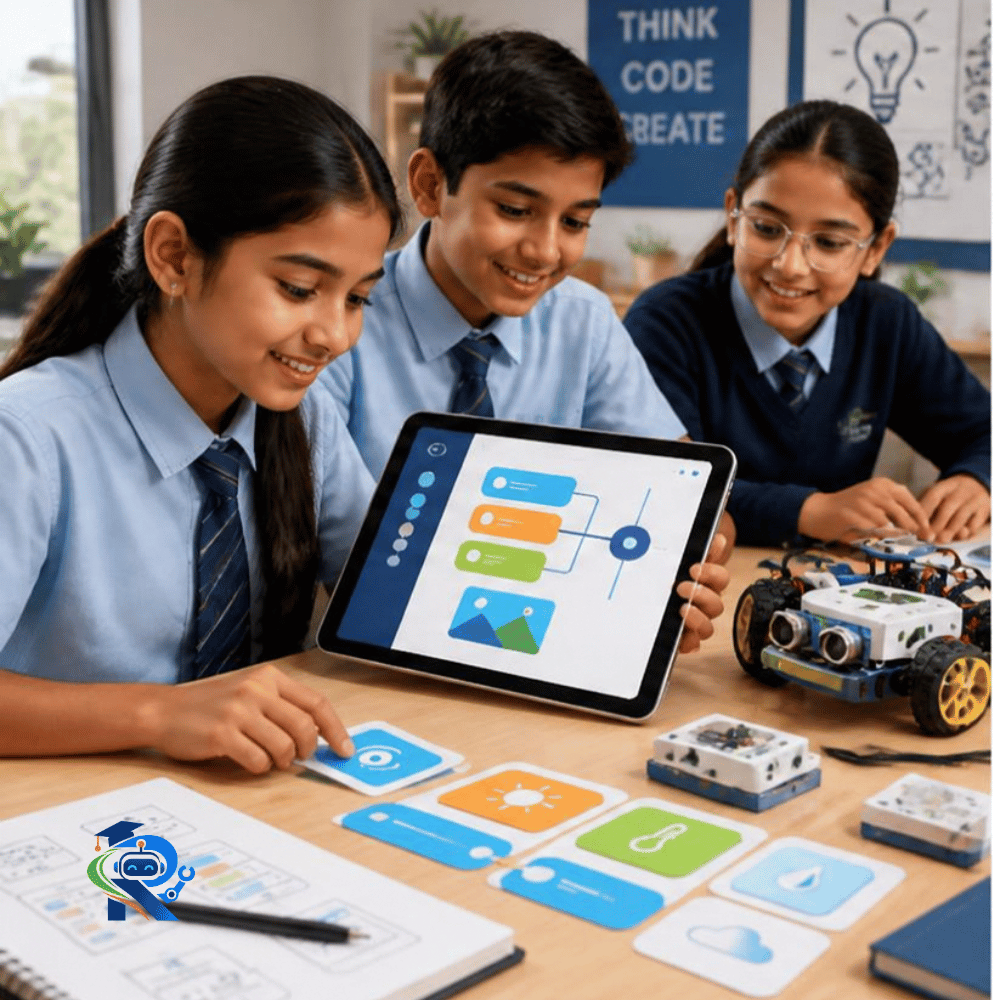
Technology Comes Alive Through Making.
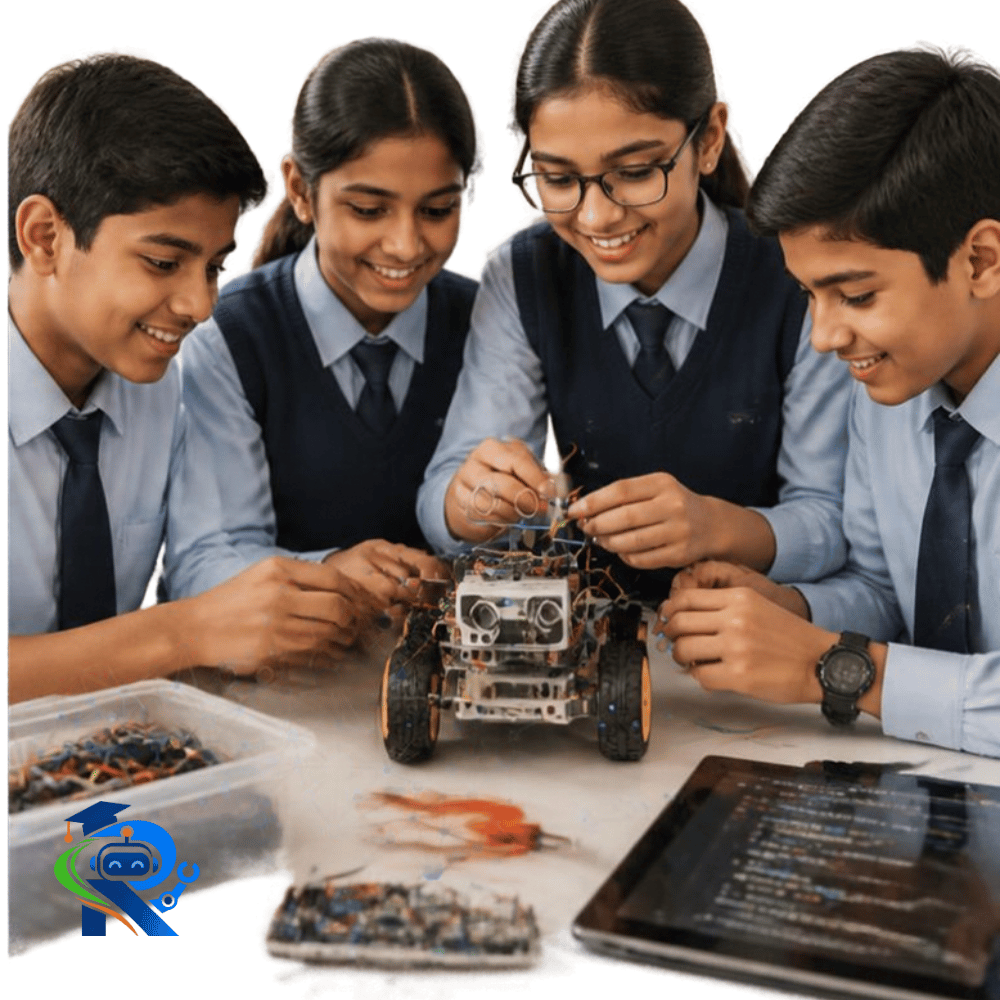
Sense. Decide. Move.
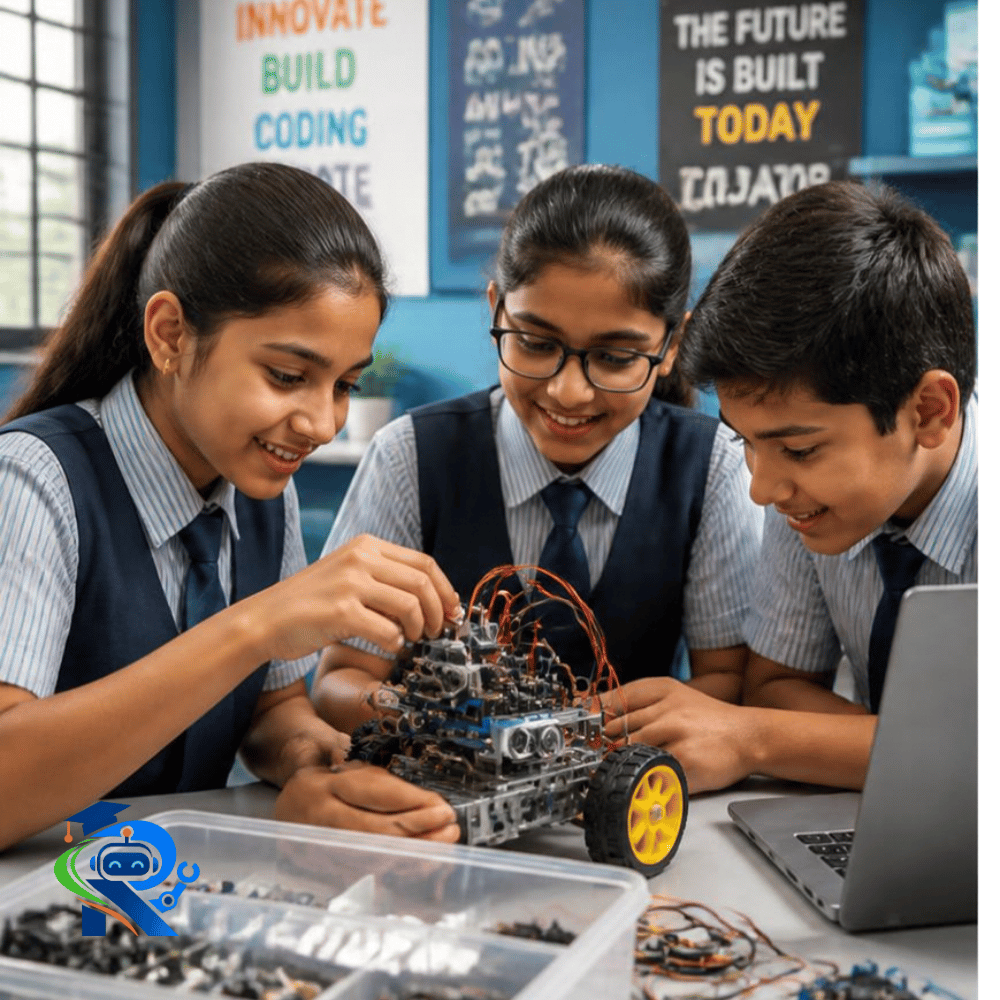
Components Become Creations.
Electronics → Robotics → Coding → Apps → IoT → AI → Python
One Sensor Can Start a Bigger Idea.
A sensor may begin as a simple component. A student learns to read it. Then control something with it. Then connect it to a robot. Then connect the system to an application. Then explore how intelligent technology can interpret information and respond.
That progression turns individual technologies into a connected learning journey.
Technology Is Better When Students Build With It.
Explore a hands-on learning journey where students can learn technology, build projects, connect systems and experiment with ideas that grow across the grades.
